
Distinguishing Change from Transitions: An Overview of William Bridges’ Transitions Model
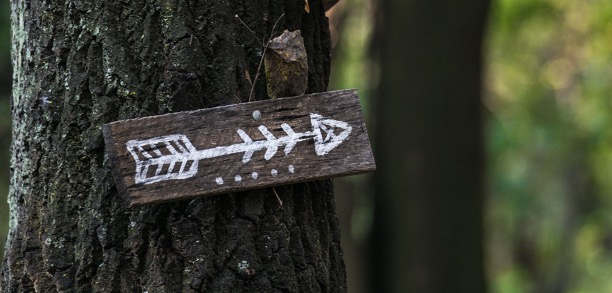
“It’s not so much that we’re afraid of change or so in love with the old ways, but it’s that place in between that we fear… It’s like being in between trapezes. It’s Linus when his blanket is in the dryer. There’s nothing to hold on to.”
– Marilyn Ferguson
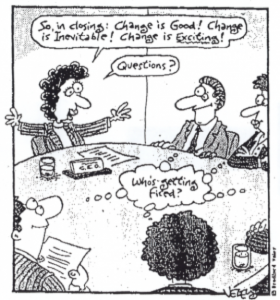
In our society, we often use the words ‘change’ and ‘transition’ synonymously. William Bridges’ model distinguishes the two by defining change as an event, situational and something that happens external to us. It is concrete, tangible and can often be marked on a calendar. On the other hand, transition is the internal, psychological reorientation process that each one of us goes through as we come to terms with the change. Bridges believes that individuals, organizations and businesses who pay attention to this difference and support people through transitions are more likely to enact change that is both lasting and effective.
The End is the Beginning
Transition is fundamentally different from change. Where change is external and situational (i.e. marriage, new job, signing of a peace accord) transition is the internal process of how one responds to the change. There are three phases in transition. The beginning of a transition is not the outcome but the ‘ending’ that one will have to make to leave an old situation behind. The psychological reorientation that humans often experience when situations change around them depends on letting go of the old reality and the old identity of oneself before the change can take place (Bridges 1991).
The Neutral Zone
Once a person has let go of something, the transition begins. After this, the second step, the neutral zone occurs. “This is the no-man’s land between the old reality and the new. It is the limbo between the old sense of identity and the new (Bridges 1991: 5).” This is the most important phase to understand in that if a person does not expect it and understand why it is there, he is likely to rush through it and be discouraged when he cannot do so. One is apt to believe that the confusion she feels is a sign that something is wrong with her (Bridges 1991). A second reaction to the neutral zone might be the desire to escape it or abandon the situation. Another possibility is the loss of a great opportunity if one attempts to short change the neutral zone. Bridges states, “Painful though it often is, the neutral zone is the individual’s and the organization’s best chance for creativity, renewal, and development (1991: 5).” Thus the neutral zone, as the core of the transition process, is both chaotic and full of creativity.
New Beginnings
The final phase of the transition is the new beginning. “The beginning took place only after they had come through the wilderness and were ready to make the emotional commitment to do things the new way and see themselves as new people (Bridges 1991: 50).” These new beginnings require new understandings, values, attitudes and identities. Bridges argues that you cannot force a new beginning but that it is possible to cultivate, encourage and allow this final phase to occur. To make a new beginning people need: purpose, a picture, a plan and a part to play (50). “Successful new beginnings are based on clear and appropriate purpose. Without one, there may be lots of starts but no real beginnings. Without a beginning, the transition is incomplete. And without transition, the “change” changes nothing (Bridges 1991: 55).”
For a podcast that explores this model, click here.
What are some of the ways that you have successfully navigated change and transition?
Updated June 2021


To the meclarkeconsulting.com webmaster, You always provide great information and insights.