
Why Don’t We Know Pauli Murray?
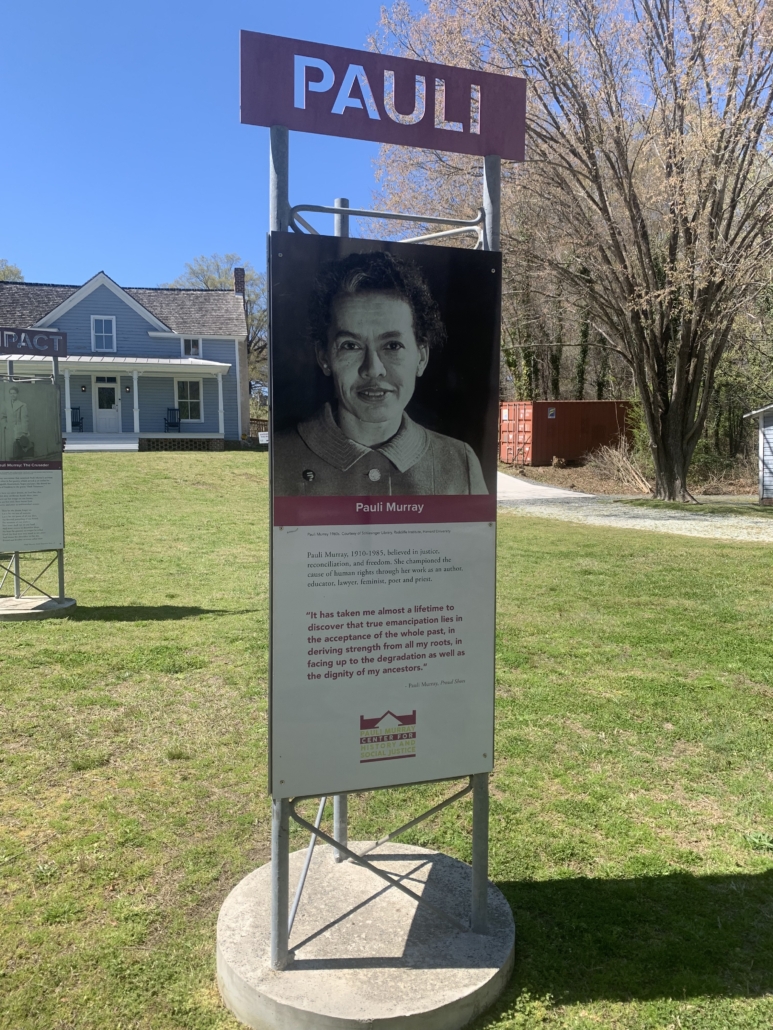
Pauli Murray was a poet, priest, lawyer, legal strategist. A human rights architect. A quiet thunder. And yet—for many of us—Pauli’s name didn’t enter our orbit in any history class or lecture.
And we live in the architecture of the world Pauli built.
Brittney Cooper names it plainly. And once you see it, you can’t unsee it.
Because Pauli wasn’t adjacent to history — Pauli was writing it.
- Before Rosa Parks refused to give up her seat, Pauli had already challenged segregated buses in the 1940s.
- Before Thurgood Marshall argued Brown v. Board of Education, Pauli’s legal writings laid the intellectual foundation for dismantling “separate but equal.”
- Before Ruth Bader Ginsburg argued gender equality before the Supreme Court, she cited Pauli’s legal theories as precedent.
- Before the Episcopal Church opened priesthood to women, Pauli became the first Black person perceived as a woman ordained as an Episcopal priest.
- Before the word “intersectionality” even existed, Pauli was living it.
Pauli didn’t just break barriers—they dismantled frameworks and built entirely new ones. Their fingerprints are all over the scaffolding of modern civil rights, gender equity, and legal justice. And yet—
Why don’t we know Pauli Murray?
And more precisely:
- Do we not know them because they were Black?
- Because they were assigned female at birth?
- Because they questioned gender before there was language to name it?
- Because they loved women?
- Because they were visionary?
- Because they made the blueprint, but never claimed the mic?
Which identity kept Pauli from being written into history?
The answer, of course, is all of them. Because intersectionality isn’t a buzzword—it’s a battleground. Pauli stood at the exact crosshairs where erasure happens most: Black, queer, gender nonconforming, brilliant—and unwilling to contort themselves into a shape the world found easier to applaud.
So why don’t we know them?
Because Pauli didn’t fit the tidy narratives history books prefer. Because to know Pauli is to be confronted with all the ways we still shrink the frame to fit the familiar. Because Pauli was living a truth too expansive for the times—and frankly, still too expansive for most of us now.
And because it’s easier—far easier—to celebrate heroes who embody one kind of struggle. Pauli’s life demanded we see the full complexity of identity, power, and oppression braided together. That complexity made them inconvenient to history’s gatekeepers.
But we know better. And when we know better, we do better. (Yes, Madam)
- We honor Pauli by widening the lens.
- By naming the systems—racism, sexism, transphobia, patriarchy—that worked in concert to bury their story.
- By refusing to flatten complex brilliance to fit the comfort zones of those in power.
- By asking the harder questions: Whose names are we still leaving out? Whose genius is still being ghostwritten by privilege?
As Pauli said:
“America, be what you proclaim yourself to be.”
Pauli Murray isn’t a footnote or a “discovered” ghost. She’s a blueprint. A blueprint for liberation that refuses to be tidy. A clarion call that still echoes, “America, do better.”
And we? We get to answer. We get to show up. We get to elevate the next Pauli before they become someone else’s rediscovery.



Thank you for writing this article! I’d never heard of Pauli Murray and I feel this was a huge overlook of my education. Do you have any further reading recommendations to learn more about them?
Hi Kathy, thank you for reading! There is a documentary on Amazon Prime called “My Name is Pauli Murray” that shares Pauli’s life and legacy. Additionally, Pauli has written a number of books. We would particularly recommend Pauli’s book “Proud Shoes: The Story of an American Family.” Thank you!