Organizational Health: What it Is & Why it Matters

What is it?
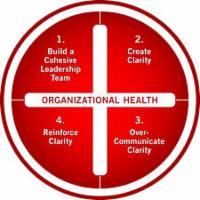
Simply put, the concept of Organizational Health uses a model of four disciplines to build and maintain a functional and successful operation. Based on the work of Patrick Lencioni, the four disciplines include: Build a Cohesive Leadership Team, Create Clarity, Reinforce Clarity, and Over-Communicate Clarity. Using the disciplines to create and address expectations, goals, and unity throughout the whole organization, healthy organizations almost always out perform their competitors and maintain a workplace free of politics, and full of energy.
What’s its value?
When an organization is healthy, better decisions get made faster and without confusion. A healthy organization values its employees and always gives them the opportunity to weigh-in, resulting in their buy-in, and ultimately their commitment to the organization’s vision, expectations, and goals. When employees feel empowered, healthy organizations are able to tap into potential intellectual capital and great opportunities that unhealthy organizations can’t even see.
The Four Disciplines
Build a Cohesive Leadership Team
The first step to creating Organizational Health is to build cohesiveness within the executive leadership team. A cohesive team focuses on the collective needs of the team and organization, hold each other accountable, and is willing to engage in vulnerability and conflict. Patrick Lencioni offers a checklist that tests for cohesiveness within leadership teams:
- The leadership team is small enough (three to ten people) to be effective.
- Members of the team trust one another and can be genuinely vulnerable with each other.
- Team members regularly engage in productive, unfiltered conflict around important issues.
- The team leaves meetings with clear-cut, active, and specific agreements around decisions.
- Team members hold one another accountable to commitments and behaviors.
- Members of the leadership team are focused on team number one. They put the collective priorities and needs of the larger organization ahead of their own departments.
Create Clarity – 6 Critical Questions
Aligned leaders are crucial to healthy organizations. When leaders can answer these six critical questions without discrepancy, an organization will avoid obstacles that are brought about by confusion and misalignment. Here are the six critical questions:
- Why do we exist? The answer to this question will yield a core purpose, or the fundamental reason the company is in business.
- How do we behave? The question examines behaviors and values required for success.
- What do we do? This answer provides a simple, direct explanation of the business.
- How will we succeed? This question requires the team members to develop a strategy.
- What is most important, right now? The answer to this question is the establishment of unifying thematic goals and a cohesive action plan.
- Who must do what? This question addresses roles and responsibilities.
Over-communicate Clarity
Once there is clarity both at the leadership and employee levels, the next step is to over-communicate. Unless the message, whatever it may be, is reinforced and repeated over and over, it won’t stick. Leaders and employees should be able to verbalize what it is that they are doing and what they are doing it. If an organization can achieve this, confusion is limited and the obstacles become fewer. Here are some effecting communication strategies.
- Commitment Clarification: This strategy requires the meetings’ discussions and decisions be reviewed for alignments and buy-in before they are communicated.
- Cascading Communication: This communication concept provides a structure for personally disseminating information.
- Top Down Communication: This is the most common type of communication flow that needs to be consistent and supported by other communication vehicles.
- Lateral and Upward Communication: It is important to acknowledge and leverage these communication methods without being overly formal or prescriptive.
Reinforce Clarity
When employees and leaders are aligned on the six critical questions, healthy organizations will make sure this same clarity is embedded into their systems, processes, and overall philosophy. These systems should be flexible, yet reinforce the values of the organization. Below is a checklist to see if your company needs to address its systems.
- The organization has a simple way to ensure that new hires are carefully selected based on the company’s values.
- New people are brought into the organization by thoroughly teaching them about the six elements of clarity.
- Ideally, managers throughout the organization have a simple, consistent, and non-bureaucratic system for setting goals and reviewing progress with employees. That system is customized around the elements of clarity.
- Employees who don’t fit the values can be offered coaching and assistance to succeed; some may choose to self-select out of the system.
- Compensation and reward systems are built around the values and goals of the organization.
If two or more of these statements aren’t true in your organization, it may be time to double-down on organizational health.
Ready to take your team to the next level? We can help.


Leave a Reply
Want to join the discussion?Feel free to contribute!